
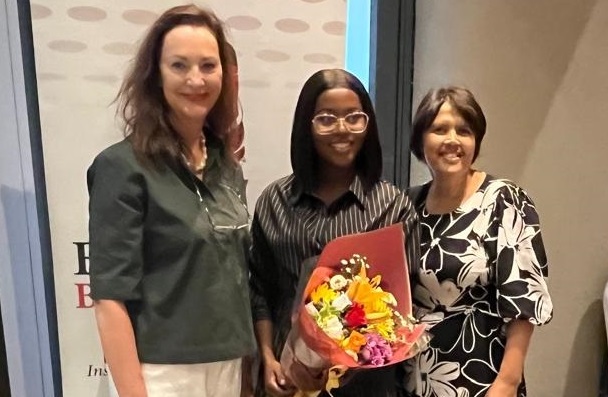
The final Economist Businesswoman Club Breakfast for 2025, held in November, offered a timely and deeply affirming conversation on leadership, wellbeing, and sustainability. Our guest speaker, Pefimbo Shipundo, a social worker and wellbeing advocate at One Economy, invited women to rethink self-care — not as a luxury or indulgence, but as a deliberate leadership strategy.
Hosted under the theme “Self-Care as Strategy: Sustaining Leadership Through Well-being,” the breakfast centred on one essential question: What can I do to best take care of myself? It was a question that resonated strongly with women navigating demanding professional roles alongside personal and family responsibilities.
Shipundo emphasised that leaders — particularly women operating across different sectors — cannot afford to neglect their wellbeing. Self-care, she noted, directly influences decision-making, emotional regulation, and long-term performance. Ignoring it inevitably leads to stress, burnout, and diminished capacity.
“We need to find those small, intentional things we can do daily to take care of ourselves,” she reminded attendees.
She challenged the deeply ingrained “strong woman” narrative that often equates rest with weakness. In a moment that struck a collective chord, Shipundo urged women to release the pressure to always be the strongest person in every space.
“You don’t need to be the strongest woman in the room, at work, at home, or in your relationships. It’s okay to rest. Rest is not a weakness,” she said.
Throughout her address, Shipundo guided the audience through five interconnected dimensions of wellbeing: physical, mental, emotional, social, and spiritual — offering practical, realistic strategies for each.
Physical wellbeing, she explained, begins with sleep, nutrition, and movement. While seven to eight hours of sleep may not always be achievable, she encouraged prioritising quality rest. She also acknowledged how stress and overwhelm can disrupt appetite and energy levels, ultimately affecting performance.
On mental wellbeing, Shipundo highlighted the importance of boundaries, delegation without guilt, journaling, and intentional quiet time. She introduced simple daily and weekly check-in questions such as: What did I handle well today? What triggered me? What does that reveal, and how can I respond differently next time? Protecting cognitive energy, she stressed, is essential — not everything deserves immediate attention.
Spiritual wellbeing, according to Shipundo, is about cultivating purpose, grounding, and inner peace. Whether through prayer, meditation, time in nature, or reflection, this dimension provides clarity and alignment in how leaders show up. “When your spirit feels clear and at ease, everything else becomes lighter. It starts with the spirit,” she explained.
In addressing emotional wellbeing, Shipundo strongly advocated for therapy as a powerful tool for self-awareness and emotional offloading. She noted that people often withhold their true feelings from family and friends, whereas therapy offers a safe, unbiased space for honesty and healing. Healthy communication and the ability to have difficult conversations, she added, are equally vital.
Social wellbeing, she said, requires intentionality — from the people we allow into our lives to the content we consume. Curating relationships that nourish and support growth, while courageously distancing oneself from draining or negative influences, is an important act of self-care.
She closed with a clear and compelling reminder: “The roadmap to success requires you to prioritise self-care. Neglecting yourself always comes at a cost — stress, burnout, health challenges, and mental health struggles. When you take care of yourself, you avoid paying that price.”
As the final breakfast of 2025, the session left attendees not only reflective, but equipped — reminded that sustainable leadership begins with wellbeing, and that caring for oneself is not optional, but essential.
For more information: Events | Business Woman